Trending

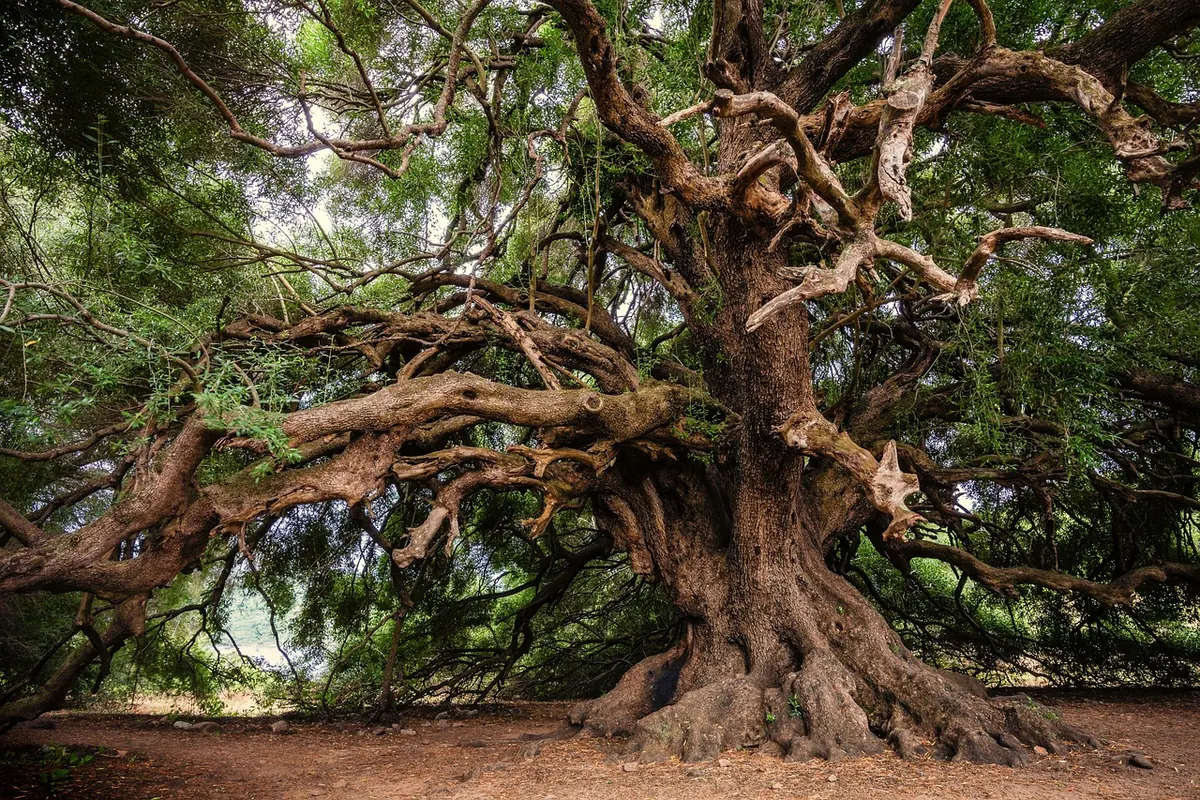
The fairy tales Britain passes down to its children tend to be the tidiest ones. Jack climbs the beanstalk, the three bears come home, Dick Whittington turns back. They survived because they were short, easy to print and easy to shorten again.
Behind them sits a much larger body of stories, gathered from kitchens, farmhouses and fishing villages. Many were written down late, in dialect, by collectors who tidied as they went. Here are five of the best, with notes on where each one came from — and how to trace the rest.
A woman bakes five pies and leaves them to cool. Her daughter eats the lot. Asked what she is singing about, the mother covers her shame by saying the girl can spin five skeins a day — and a passing king, taken with the idea, marries her on that understanding.
Eleven months pass in excuses. In the twelfth, the queen is told to spin five skeins or lose her head. Enter a small black thing with a long tail, which spins the yarn each night in exchange for three guesses at its name. The queen wastes her guesses, then hears the creature singing in the wood: Nimmy nimmy not, my name's Tom Tit Tot.
This is the English cousin of Grimm's Rumpelstiltskin, and it reached print in Joseph Jacobs's English Fairy Tales (1890). The guessing-the-helper's-name plot is one of the most widely travelled story types in Europe; what makes the Suffolk telling its own thing is the dialect and the rhyme. Read it silently and it limps. Read it aloud and the whole structure clicks into place.
Two girls, two mothers, one jealous queen. Ann is the prettier, so her stepmother has a hen-wife work a spell that leaves Ann with a sheep's head on her shoulders. Kate, her stepsister, refuses to abandon her. She wraps Ann's head in a cloth, hoists her onto her back and sets off to seek their fortune.
They reach a castle where the young lord is wasting away, and where anyone who watches over him for three nights may win him — or die. Kate takes the watch. At midnight the sick man rises and rides out. She follows, cracking nuts as she goes and dropping the shells to mark her route, and so finds the fairy hill where the cause of his illness is plain to see. The remedy she learns there cures him. Ann's head is restored as well, and both sisters end better off than they began.
The tale belongs to Orkney and Shetland, collected in the nineteenth century and printed by Jacobs. The northern isles have strong Norse connections, and you can feel them: the fairy hill, the watcher in the haunted castle, the spell with a workable loophole. What sets it apart is the heroine. Kate does not wait to be rescued; she carries her sister, keeps her nerve and solves the problem.
Laidly is northern dialect for loathsome. The king of Northumberland's daughter, Margaret, is turned into a dragon by a stepmother who practises witchcraft, and the creature lays waste to the countryside. Her brother, Childe Wynd, is away at sea. He sails home, comes ashore, and kisses the worm three times on its dreadful mouth. The spell breaks, Margaret returns, and the stepmother's power is undone.
The ballad was printed on broadsides and in northern song collections from the eighteenth century onwards, and it has a fixed address: the crag of Spindleston Heugh on the Northumberland coast near Bamburgh. That anchoring is typical of British wonder tales. A rock, a well or a ruined tower does a lot of work, because it gives a story a place to happen and a place to be retold. The underlying motif — a knight who must kiss or embrace a monstrous woman to free her — runs right through medieval romance.
A childe was a young nobleman waiting to be knighted. Rowland and his brothers are playing ball when it goes into the churchyard. Their sister Burd Ellen runs widdershins — anticlockwise — round the church to fetch it, and vanishes into Elfland. Two brothers go after her and never come back.
Rowland goes last. He is warned that in Elfland he must not eat, drink or answer a question if he wants to come home, and he keeps to it. He reaches the dark tower, finds his sister, and faces the King of Elfland. Tellings differ on how it ends: some have him win her back by force, others by finishing a task.
Shakespeare put the line "Childe Rowland to the dark tower came" into King Lear, which shows the story was already old and already famous by 1605. Robert Browning borrowed it again for his 1855 poem. The full prose version reached print in the nineteenth century through Jacobs. The widdershins detail is not decoration: in British folk belief, turning anticlockwise was the wrong way to do almost anything.
In the Suffolk village of Woolpit — the name means wolf-pit — two children were found near the pits, a boy and a girl. Their skin was green, their clothes were of an unfamiliar cut and colour, and nobody could understand a word they said. They refused bread at first, then ate beans. The boy sickened and died. The girl learned English, married, and said they came from a place called St Martin's Land, where the light never grew brighter than twilight and everything was green.
Two twelfth-century chroniclers, Ralph of Coggeshall and William of Newburgh, wrote the story down, which is unusual for a tale of this kind and is the main reason it is still argued about. Readers have proposed a garbled memory of displaced families, a story imported from somewhere else, and a straightforward account of fairy abduction. None of these can be settled. What matters is that the story was recorded as rumour and wonder rather than as a tale with a moral, which gives it an odd, cold feeling that fairy-tale retellings rarely manage.
Most of these stories take ten minutes to read and are genuinely strange. A few habits make them better.
If you plan to tell one yourself, keep the rhymes, keep the odd details — the sheep's head, the green skin, the nutshells on the path — and resist the urge to tidy the ending. The strange bits are the bits that lasted.
Photo: liggraphy / Pixabay